Introduction
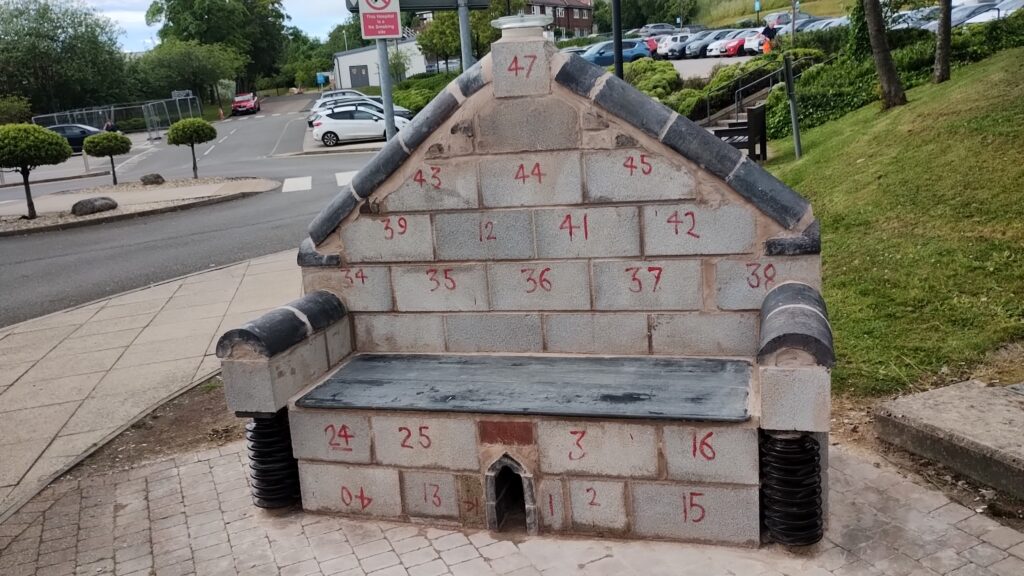
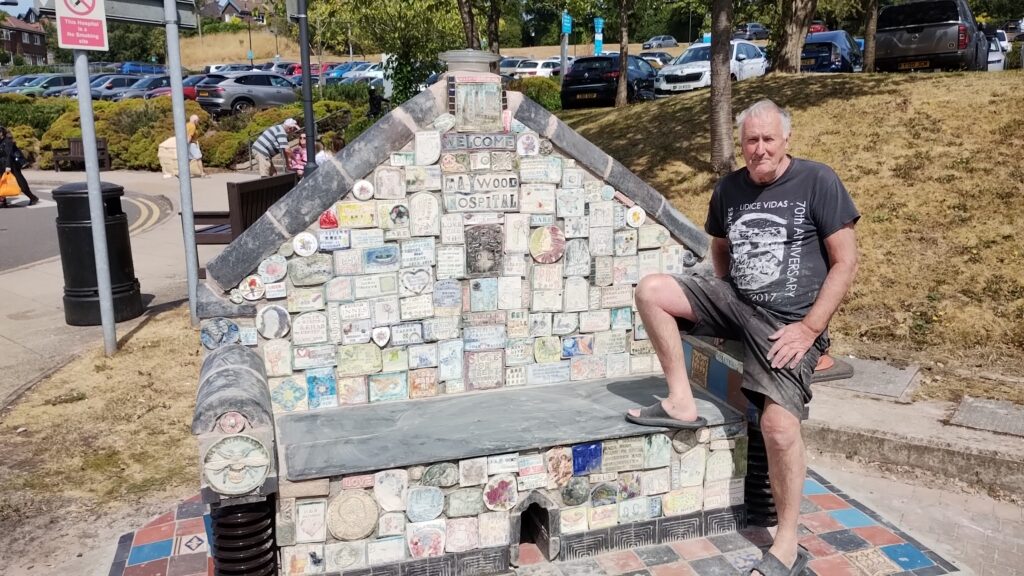
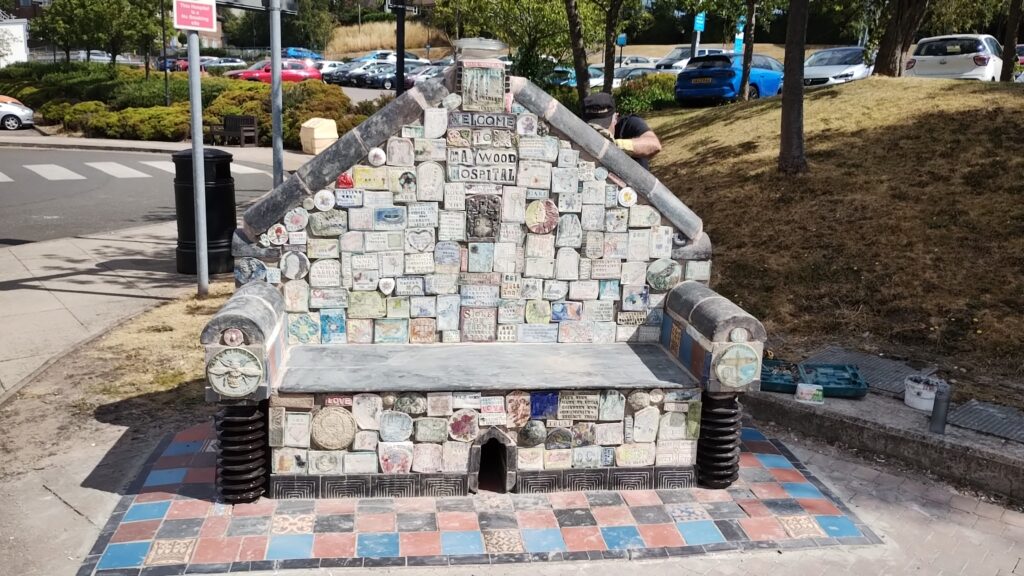
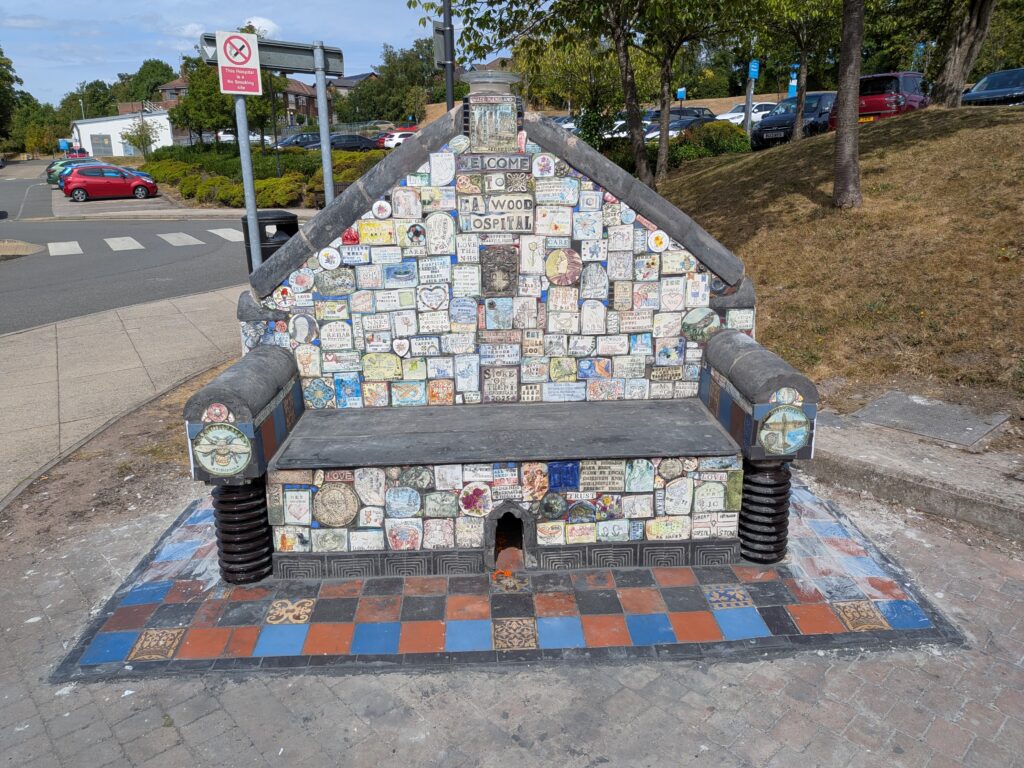
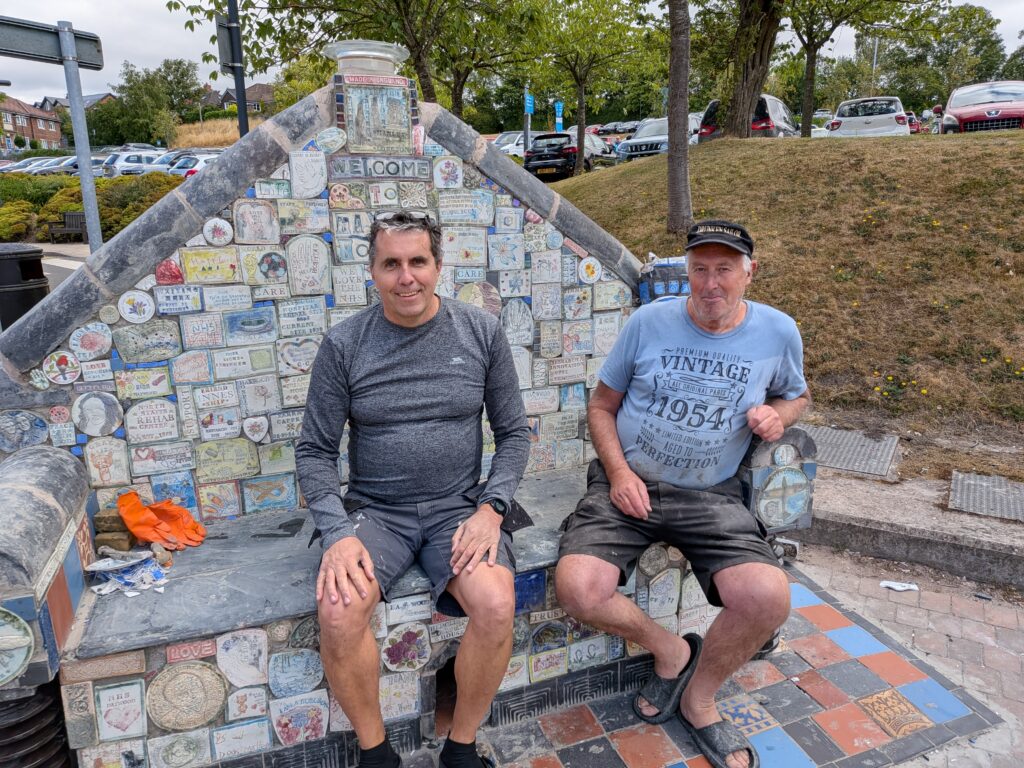
The ceramic artist Philip Hardaker created a ceramic sculpture for the Haywood hospital in 2026 – the concept had initially been proposed by ourselves in February 2024. Philip composed an imaginative work of art in the form of a seating bench, providing a setting for thoughtful reflection on the Haywood hospital, its community origins / links and its significance to the lives of folk who’ve been touched by it.
The sculpture is an artistic consolidation of ceramic tiles made by patients, doctors / nurses, families and non-clinical staff. Philip blends them into a poignant composition, which will remain indefinitely in the Haywood hospital grounds. Following the hospital’s inevitable rebuilding / repurposing in 2070 / 2090 / whenever, it’ll be an enduring expression of the esteem in which it was held in 2026, long after many of its contributors have departed this mortal coil.
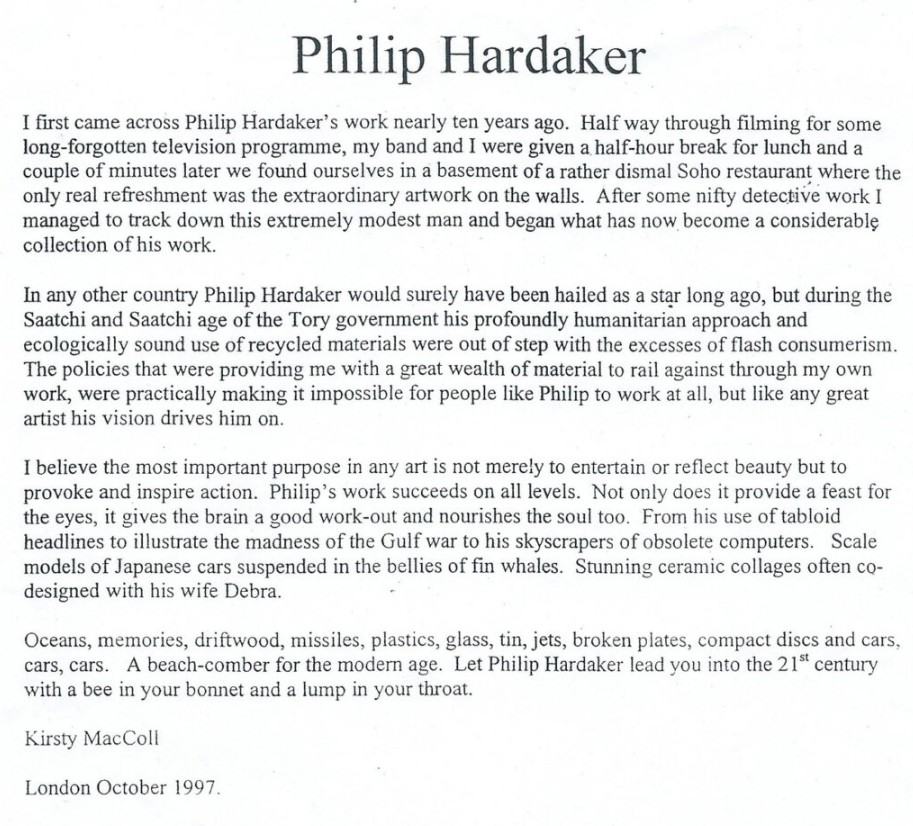
Philip maintains a website where he articulates his vocation as a sculptor / ceramicist / mosaic artist, references his community / school and private undertakings, and presents publications regarding his art. There’s a local newspaper article which provides a substantial description of Philip and his work, as well as a short biography written by a third-party art dealer. A particular favourite item of mine is a critique of his art by the singer & songwriter Kirsty MacColl.
I’ve published a web page about Philip’s creation and building of ceramic art in community settings around Staffordshire.
My Personal Contribution
The Haywood hospital means an awful lot to me; I summed up my feelings towards it on my Hospital Rehabilitation page when expressing the following: “I was admitted as a shell of a person, then discharged home just six weeks later as David Wozny.” I was a befriending volunteer on the Broadfield ward from 2024 onwards.
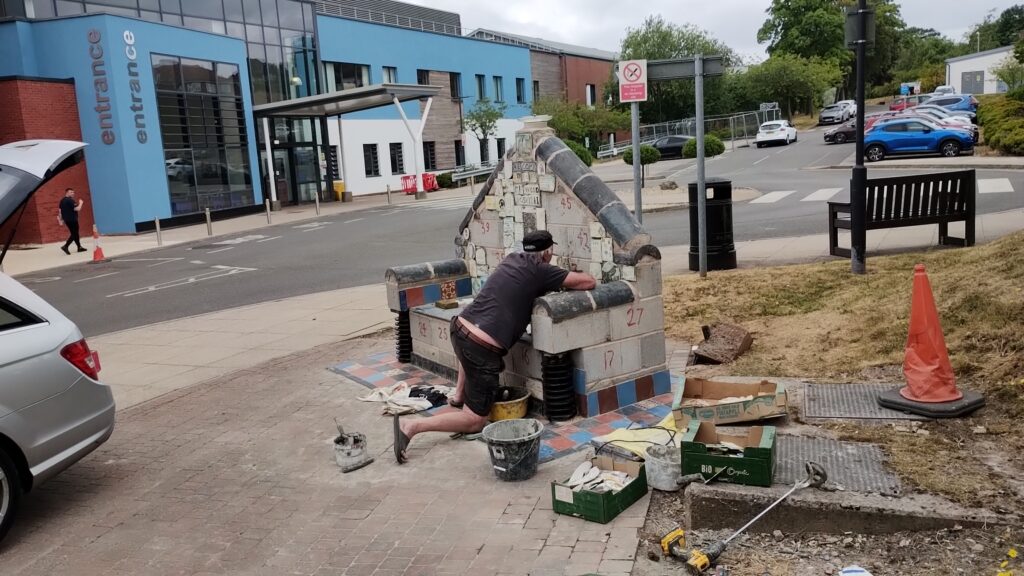
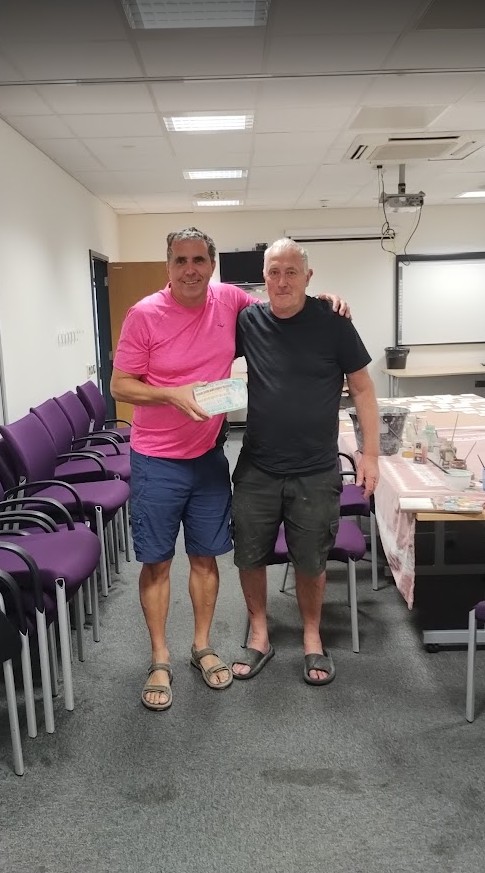
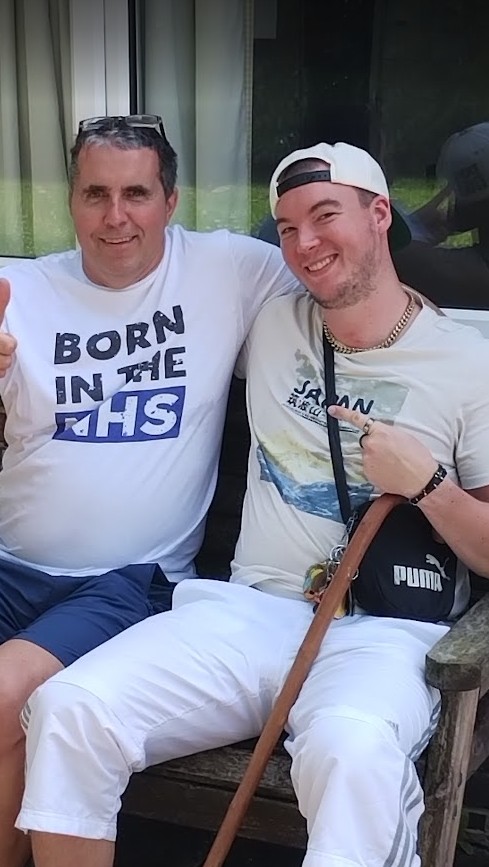
I commenced assisting Philip as a colleague, but after four days of working alongside each other, I felt we became friends. On the first two days I was largely cleaning and organising materials; by the fourth day Philip entrusted me with filler tiles, which I needed to cut before affixing into small gaps – I felt proud to do so.
Upon observing our undertaking, numerous people about the hospital grounds came over to chat to us. They’d typically ask specifics regarding the ceramic sculpture’s purpose or construction, then more often than not express what the Haywood hospital meant to them during some stage of their life – it helped further validate our endeavour.
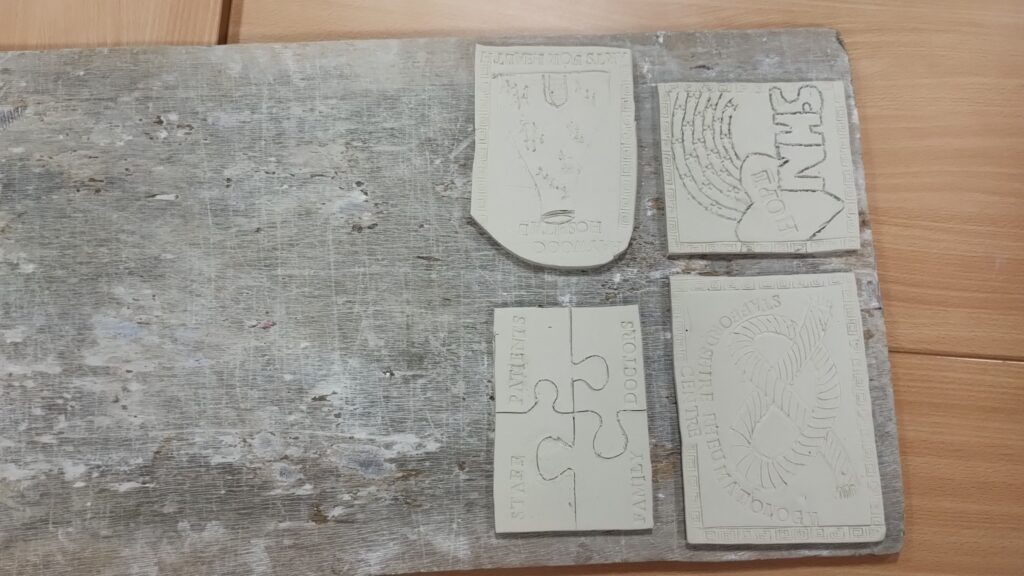
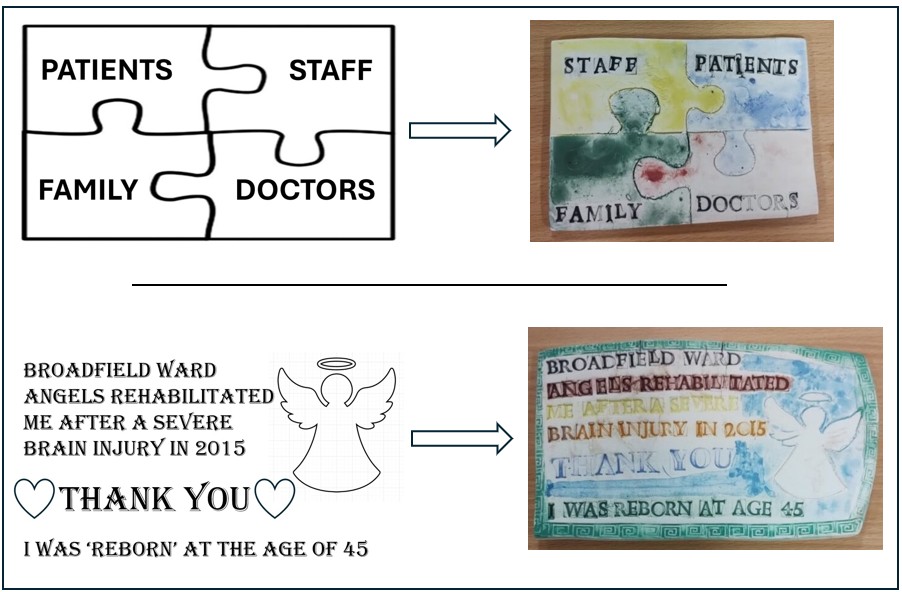
I made two personal tiles. On the first one (a pseudo jigsaw), I expressed my sentiment of the Haywood hospital having a ‘community’ feel about it, rather than purely being a setting for clinical care. The second tile reflects what a special place it’s been, and continues to be, during my journey through life.
Ceramic Sculpture – a Life Story 🙂
Origin
I first became aware of Philip Hardaker in 2022, through our mutual connection with the Beth Johnson Foundation. Philip had made a ceramic sculpture to celebrate their 50th anniversary, which I’d partially contributed to – see page 11 of Clay Stories. I then went on to observe Philip’s community art work at numerous sites around Stoke-on-Trent and surrounding areas; among them were Stoke Minster, Keele University and Burslem town hall.
In February 2024 I met with Philip at his studio to ask him whether he’d be interested in making a piece for the Haywood hospital. Philip responded enthusiastically, so I began correspondence with Haywood hospital administration, to learn if / how we could make this happen. The hospital at this time was undergoing significant building work for a new outpatients facility, so our initiative went on their back burner. Philip and I slowly persevered, and in February 2026 Philip received notification from the Haywood that they were in a position to proceed.
Design Phase
Upon receiving the commissioning, Philip was determined to create something which reflected and celebrated what the Haywood hospital meant to the community. His goal was to take individually created tiles, made by folk who wanted to express why the hospital was special to them, and amalgamate then into a ceramic sculpture which harnessed it’s collective energy. Philip desired that the sculpture would make a bold statement about the Haywood hospital.
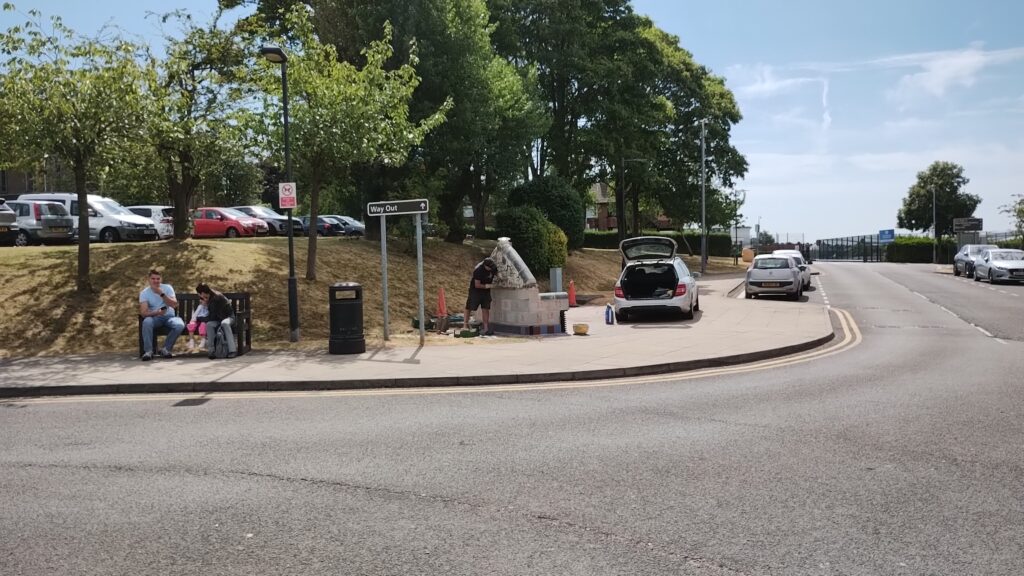
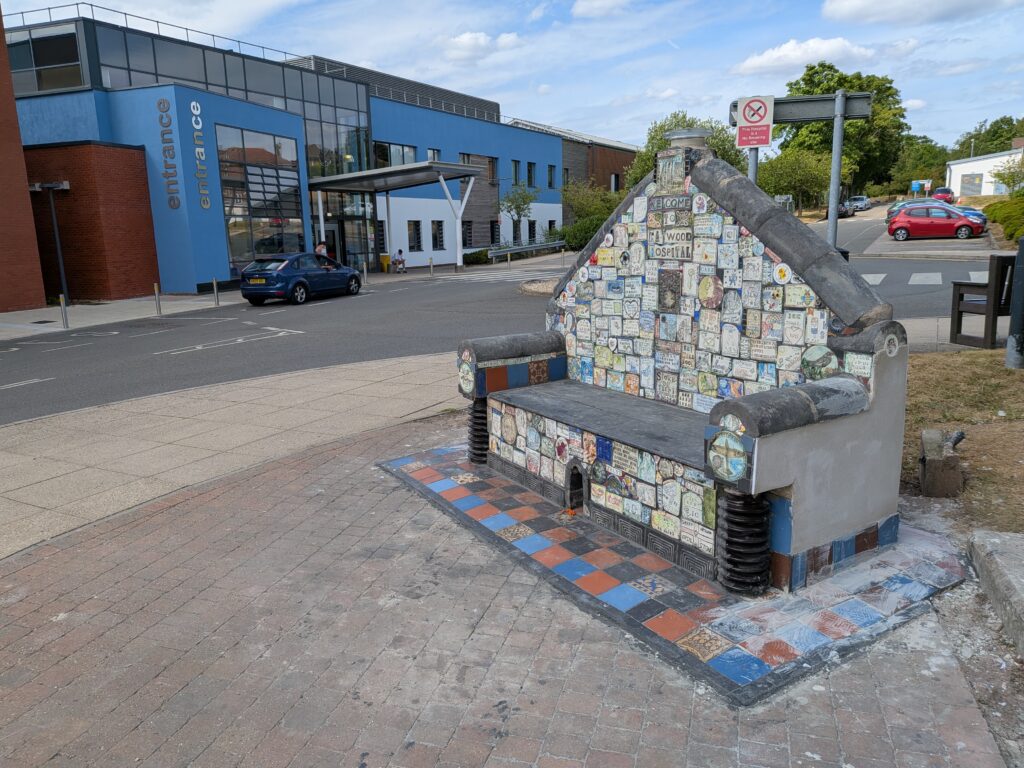
Following dialogue with hospital administration, Philip was assigned an area near to the front hospital entrance for use, it had previously been a smoking shelter – subsequently decommissioned. The location was unavoidable to observe by anyone with cause to visit the hospital, people arriving by car would find themselves walking down steps immediately adjacent to it.
Philip planned the orientation of the sculpture such that it was south facing, meaning it would be bathed in healing sunrays during daylight hours.
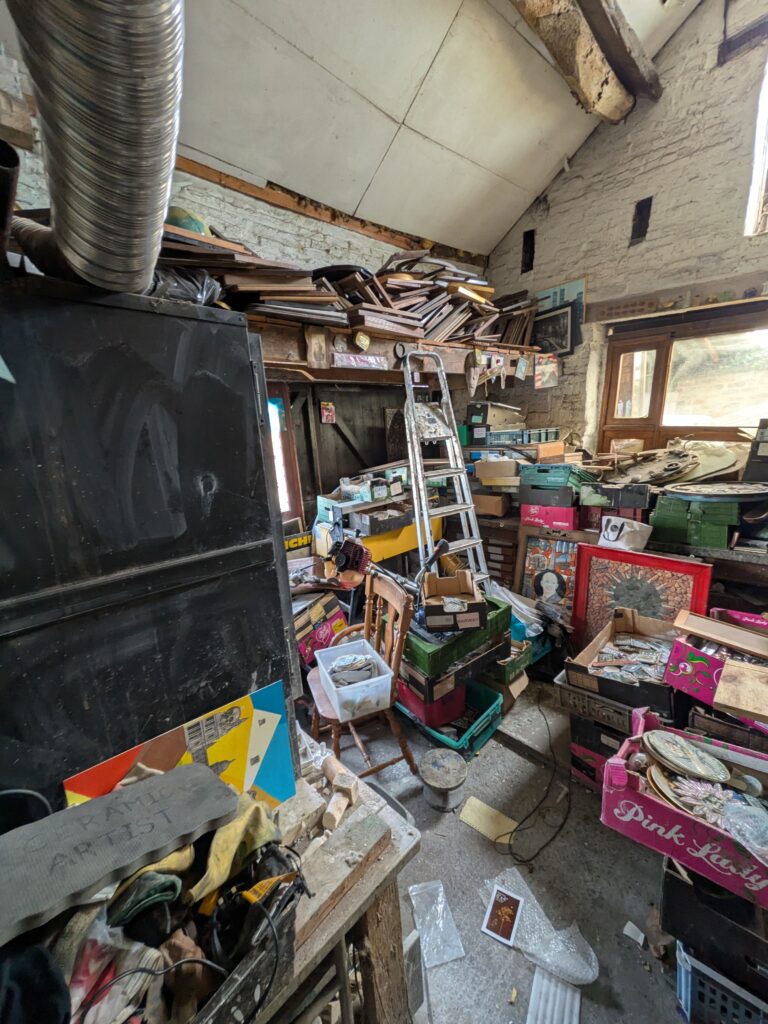
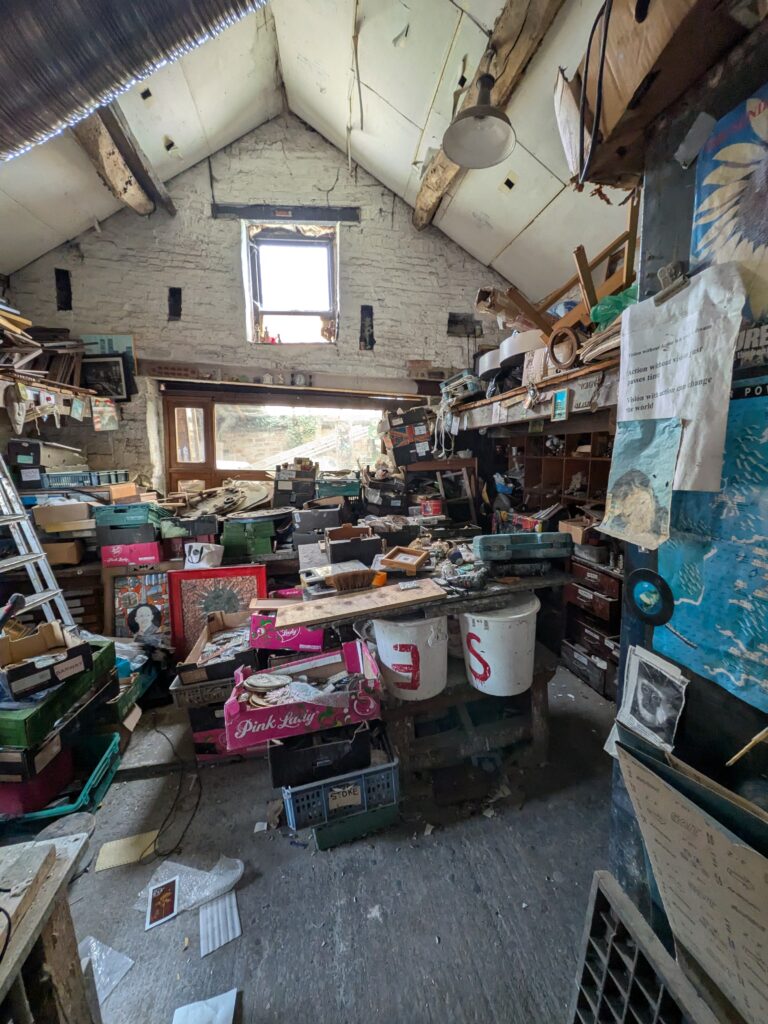
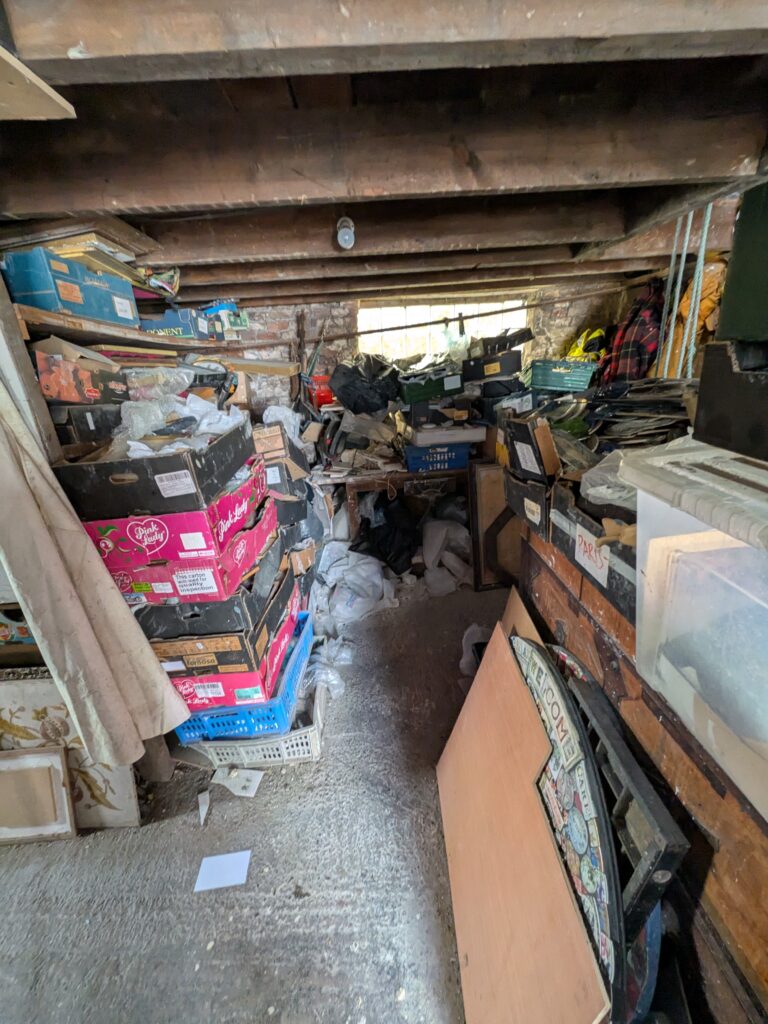
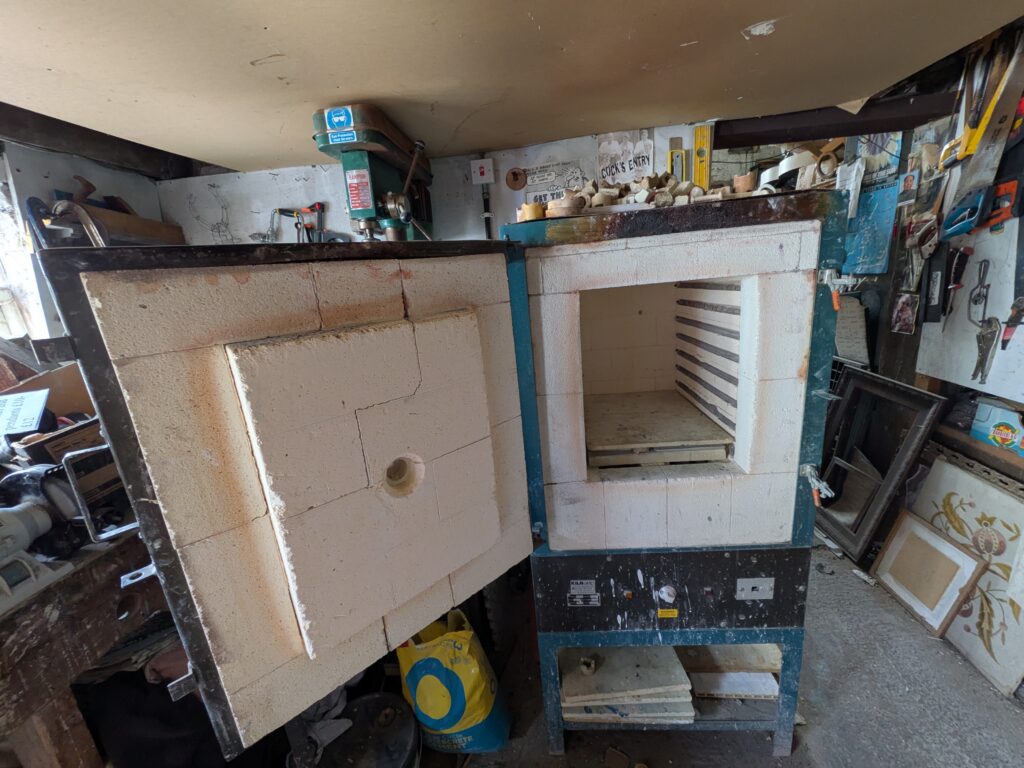
Philip’s workshop – evidencing his passion for detritus
Seat Build
In a metaphor for regeneration, Philip was determined to use recycled material wherever possible, particularly items from the Potteries region – he wanted Stoke to be part of its ethos. A large number of the materials Philip used are Victorian era.
The bench was constructed at Philip’s workshop in Packmoor, following drawings he’d made. Some of the materials used are described thus.
- Recycled insulators used in electrical pylons and sub-stations. They were acquired from a factory in Milton when it was closing down – Philip had been invited to retrieve as much material as he wished
- Coping stones for the bench arms and shoulders, as well as slate for the bench seat from Cherished Chimneys
- Minton tiles were gifted from organisations on the basis of them being used for community purposes
- Edging tiles (for use in swimming pools) from Platts Tiles in Tunstall, prior to it closing down
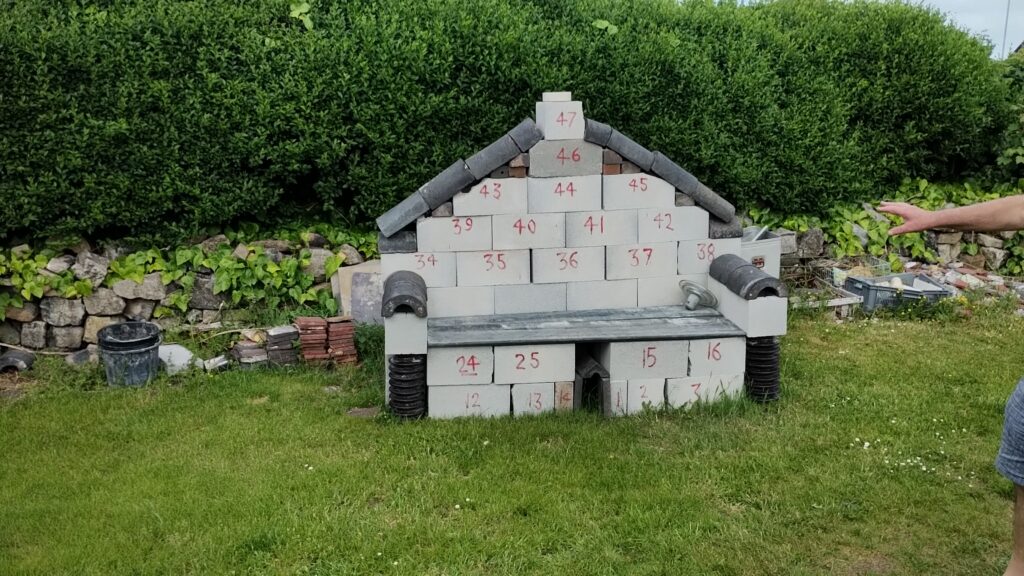
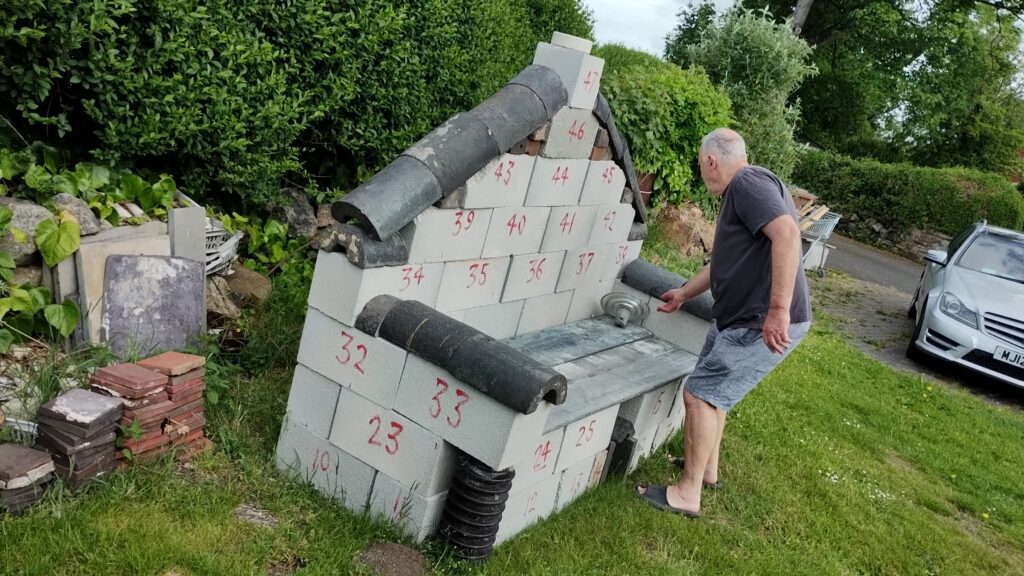
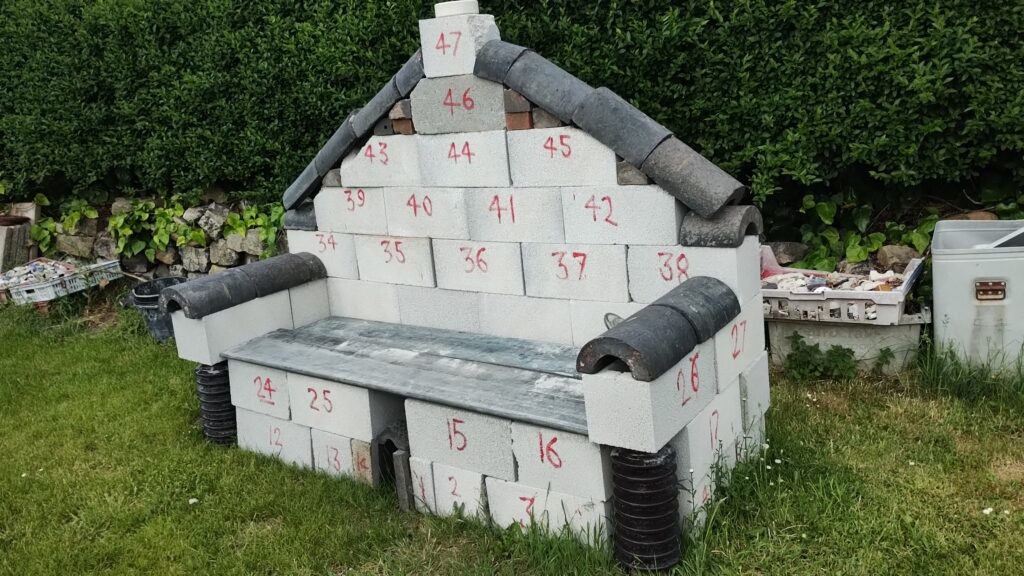
Beyond the bench structure itself, the base has a sequence of Minton tiles surrounding it – these aren’t shown, but are on the latter photos taken at the Haywood hospital. The Minton tiles ensure that the sculpture is visually distinct from its surrounding area at the hospital, and reflects / comprises Potteries heritage.
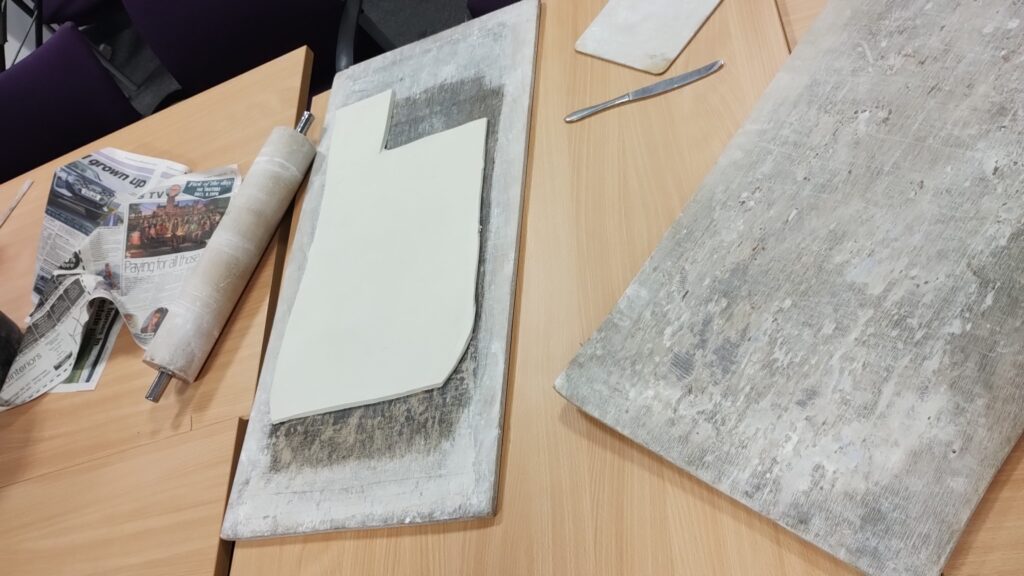
Philip prepared slabs of clay in preparation for the tile making workshops.
- He’d first acquire 25kg bags of moist clay from Valentine Clays in Fenton
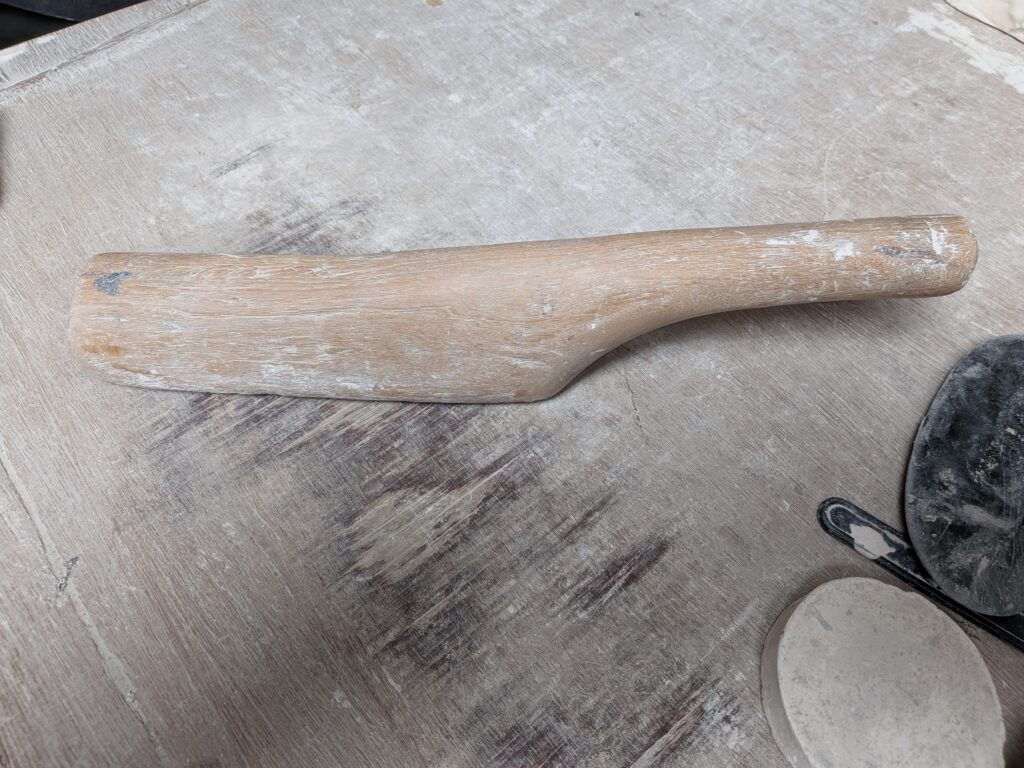
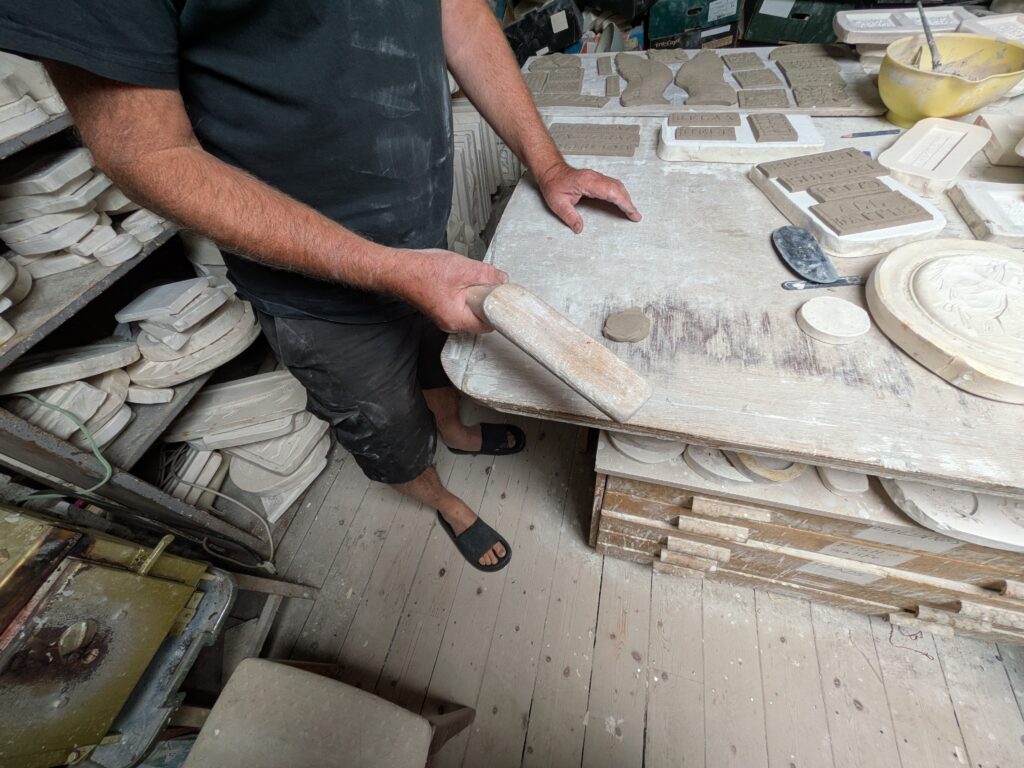
- He then used a lead beating tool to roughly flatten a suitable lump of clay
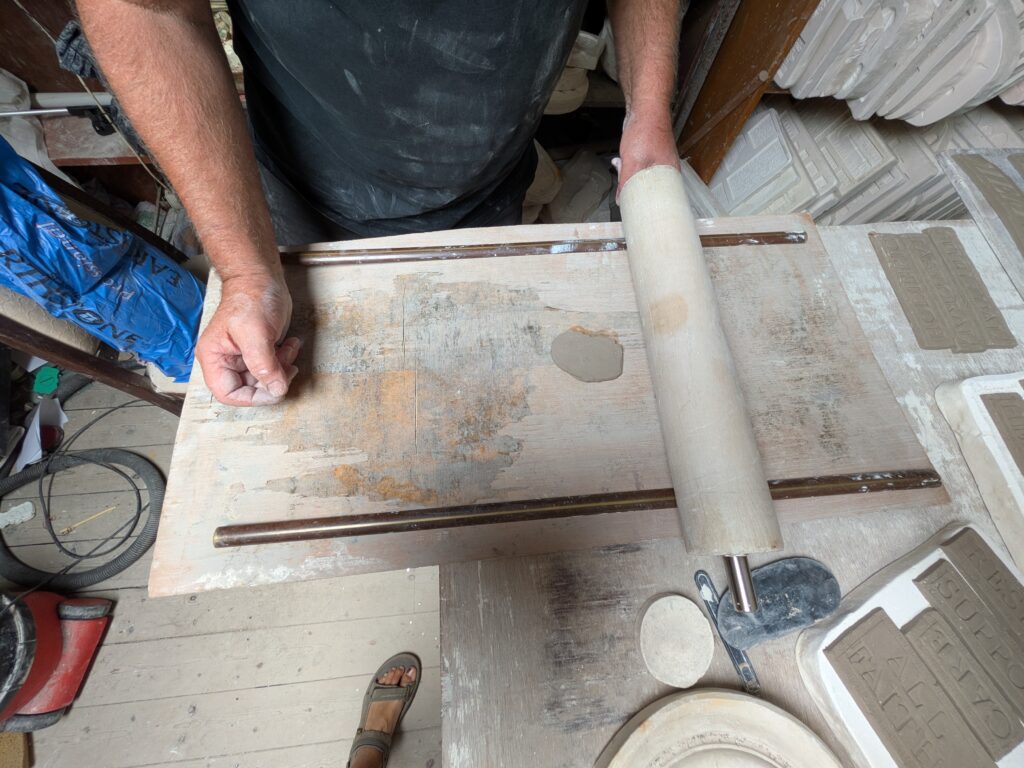
- The next stage was to place the beaten clay between two stair rods on a work surface
- Philip then used a rolling pin to flatten the clay out to the desired thickness
The end results were slabs of clay, roughly measuring 36″ * 24″ * ¼”, which Philip would transport on an as needs basis to various tile making workshops.
Tile Making Workshops
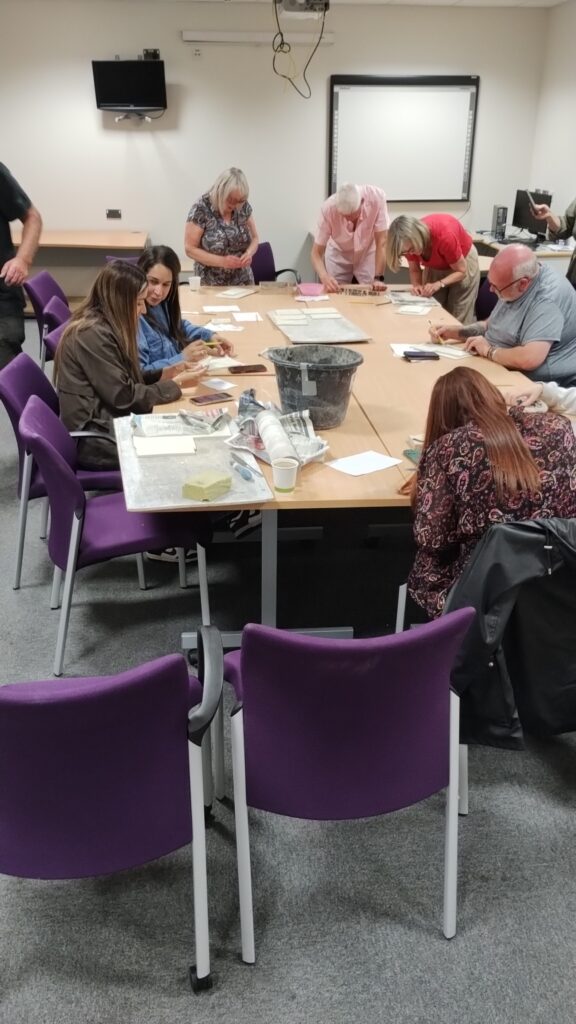
A flyer (and follow-up emails) for tile making workshops were organised by Haywood hospital staff. The workshops were held at community / church / school and hospital locations within the vicinity of Haywood hospital. A total of forty children and one hundred and eighty staff / patients were involved in making tile contributions.
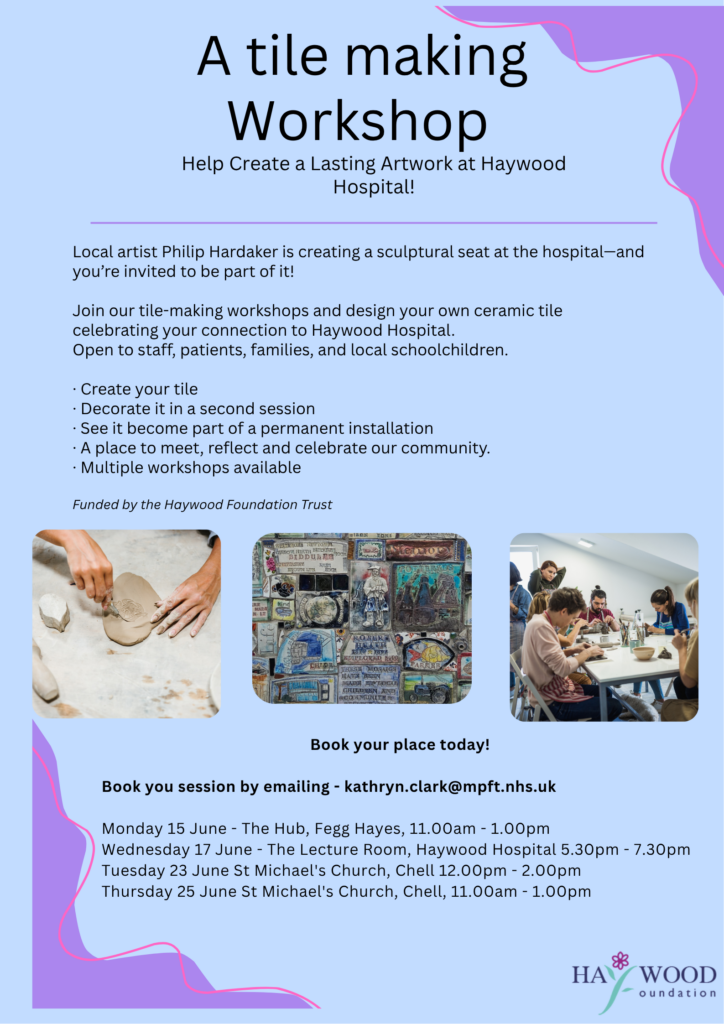
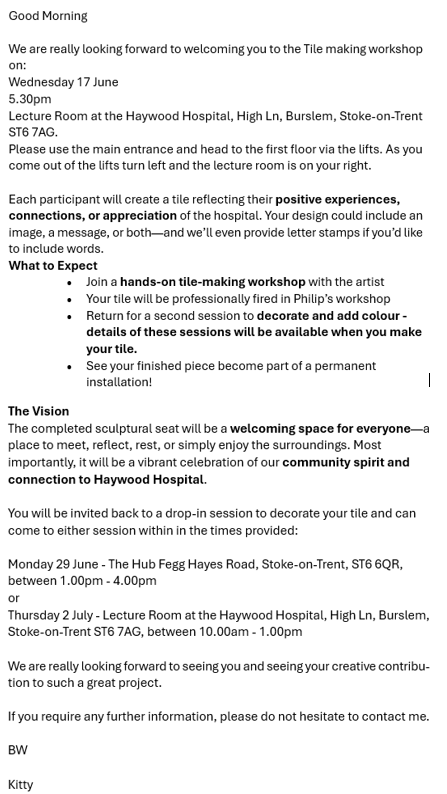
Attending contributors were asked to prepare a sketched design, from which Philip would cut a suitable sized blank tile from the prepared slabs, which Phil had brought along with him.
The sequence of tile making largely went according to the following order.
- Acquire paper designs from contributors
- Cut tile pieces from the slab to suit the designs
- Assist contributors with their design and lettering – the principal work of the tile making
- Cut out the tile edging
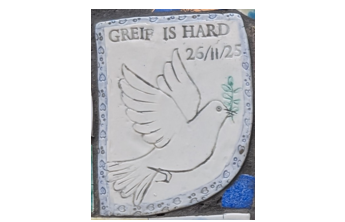
The following illustration serves as an example of what a completed item from the tile making workshop stage looked like (prior to firing).
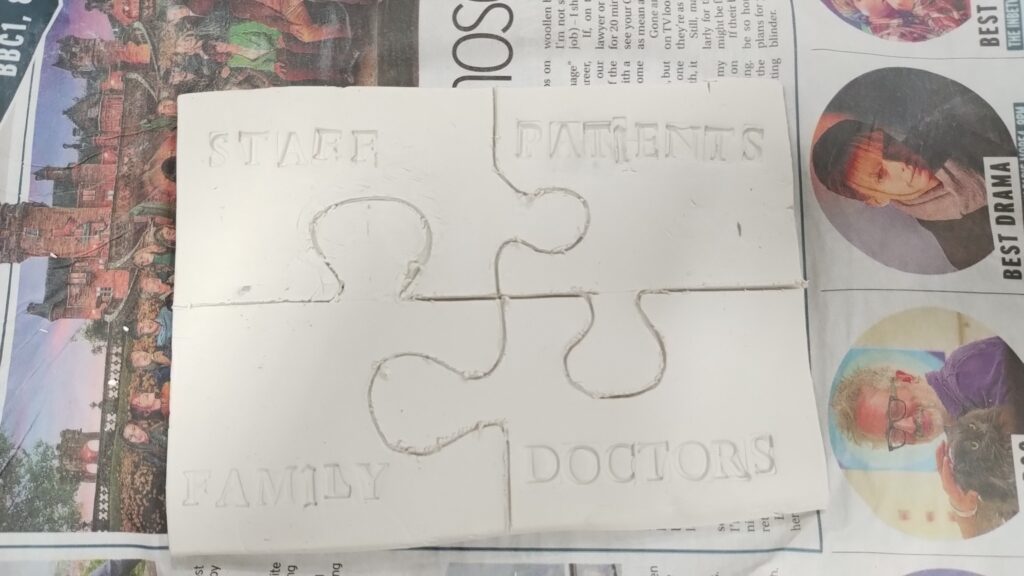
Philip would transport the tiles incorporating the contributor’s designs to his workshop, then fire them in his kiln at 1000°C to 1100°C for twenty-four hours.
Tile Painting Workshops
Workshops were organised for contributors to follow-up on their design with colouring, whereby Philip would bring along the tiles he’d previously fired.
The contributors would apply underglaze (colours) to their tiles with a brush, using a technique analogous to painting.
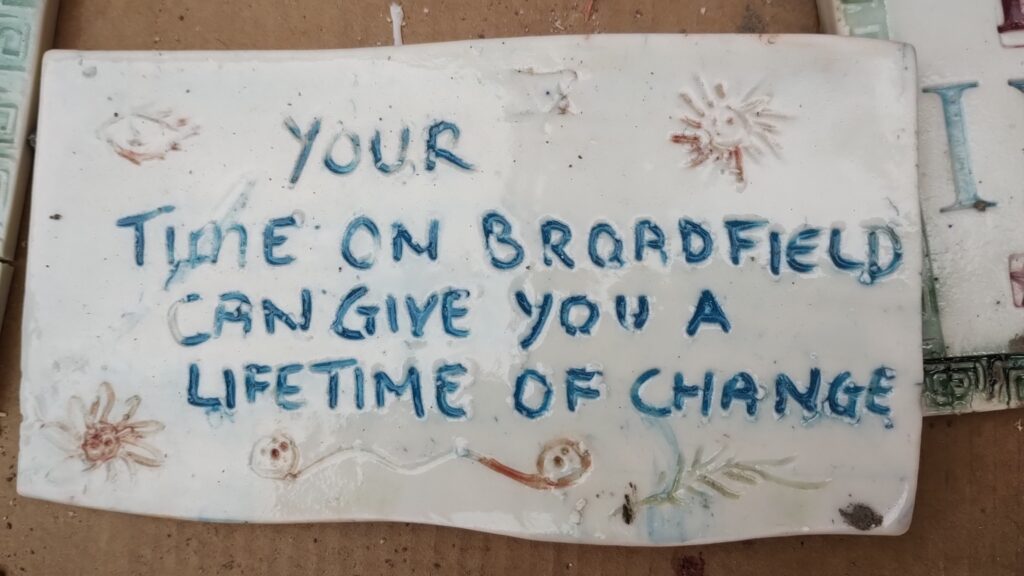
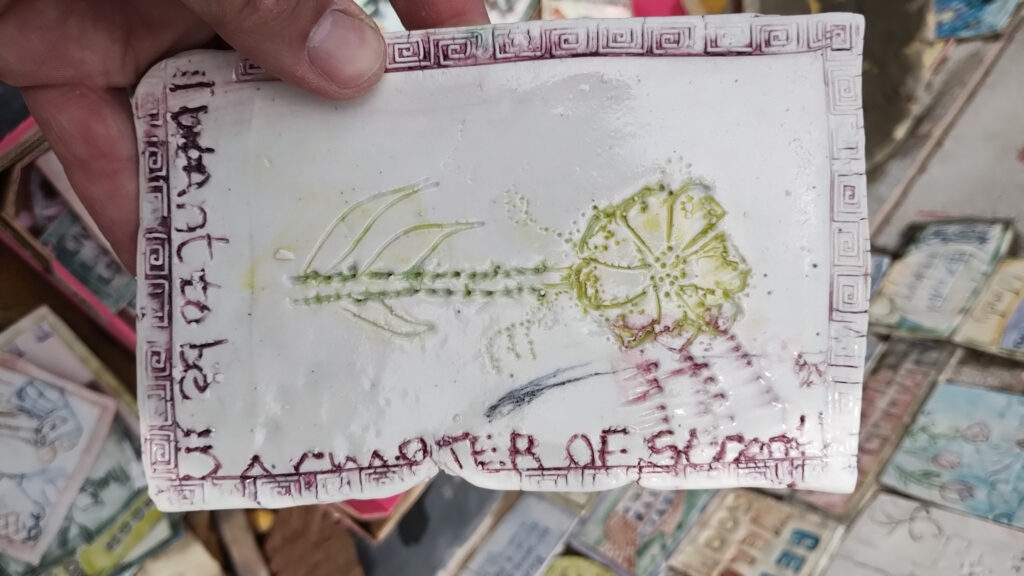
The following illustration serves as an example of how a completed tile from a tile painting workshop appears.
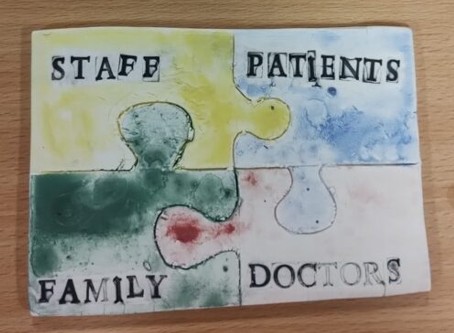
Upon conclusion of the tile underglazing, Philip returned the tiles to his workshop, where he’d apply (surface) glaze. He’d place them in his kiln and fire them at 1250°C for twenty-six hours, at which point the glaze melts – becoming translucent.
Tile Assembly & Composition
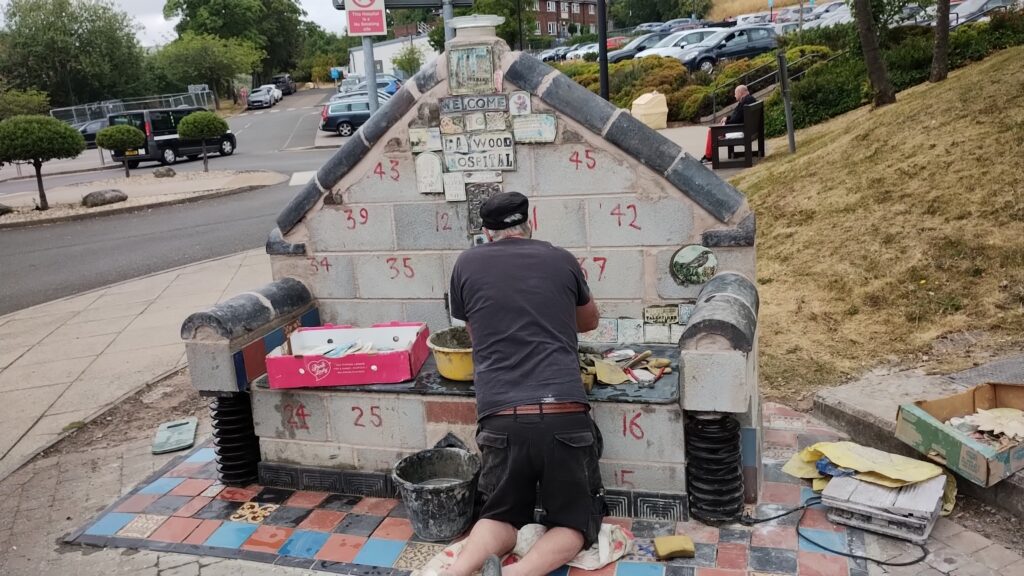
Philip began the affixing and assembly of tiles on the bench by marking horizontal and vertical central lines. He then affixed a ‘Welcome to Haywood Hospital’ tile using ceramic adhesive, it served as the anchor for the remainder of the composition.
Philip had a vision in his head for the layout of tiles, and set about using the ceramic adhesive to affix them to the bench’s front, sides and rear. Philip also created a tiled entrance which he named ‘Hedgehog Hibernating House’, such that it would be accessible for animals to hibernate inside during winter.
Beyond the affixing of tiles, the following tasks were undertaken:
- Filling of gaps with grout
- Rendering of any untiled areas
- Cleaning and polishing of all surfaces
- Final glaze
The sculpture possesses has a glass bowl in its roof to facilitate water gathering for birds in the area, fulfilling Philip’s ethos for the sculpture to share space with other creatures / nature.
The sculpture will be illuminated by lighting during the hours of darkness.
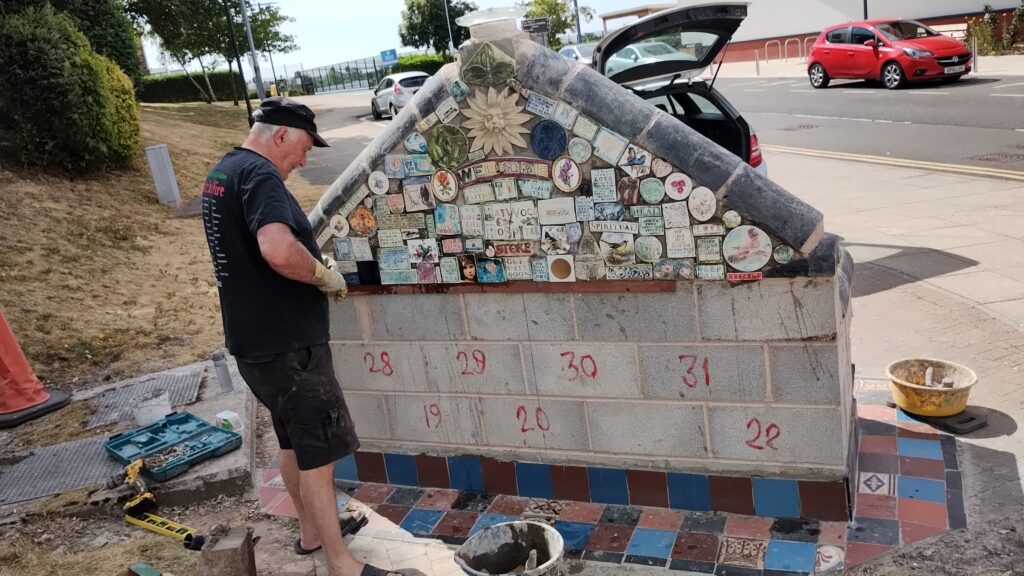
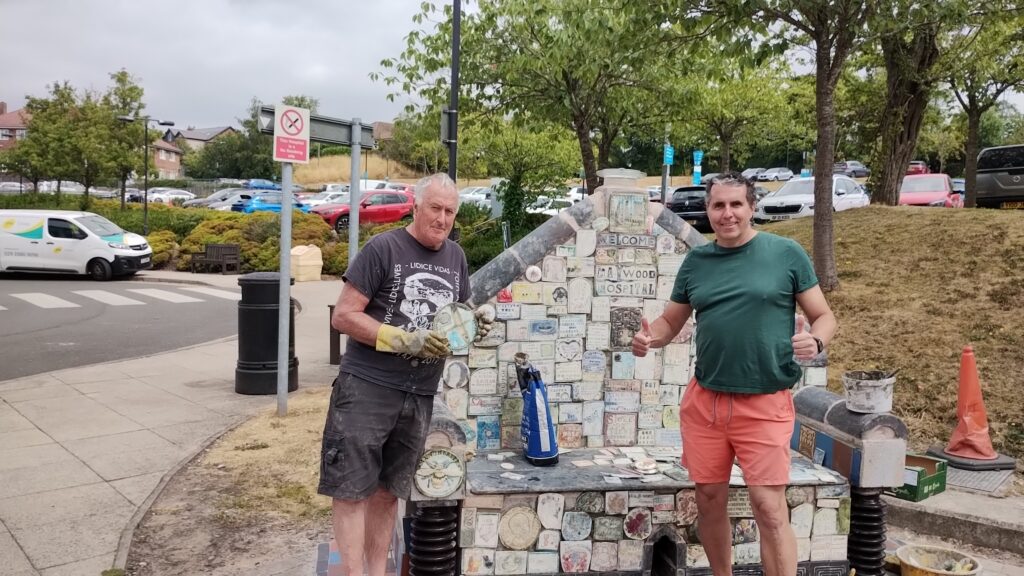
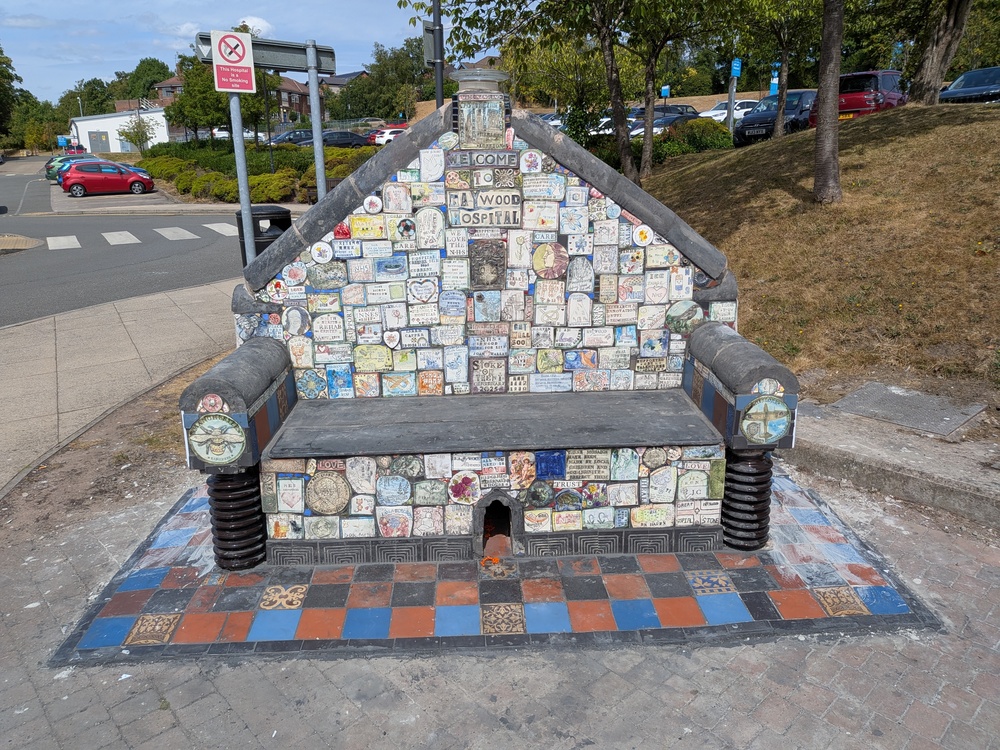
A Ceramic Sculpture’s Journey to Life – in Pictures 📸
The following photos illustrate the creative journey of the Haywood hospital ceramic sculpture.
Jumping ahead: the hospital’s trust organisation published an article following the bench’s official opening and the local Evening Sentinel newspaper similarly published an article in recognition of the bench’s ‘unveiling’.